Office Plants in Cape Town: 5 Design Habits That Make Workspaces Feel Overdecorated
Many offices in Cape Town try to improve their environment by adding more plants, décor, and flowers.
Over time, however, these additions can unintentionally make a workspace feel cluttered or visually overwhelming — even when the intention is to create a welcoming and professional atmosphere.
Interior designers often follow a simple principle:
Before adding something new, consider what should be removed.
When too many decorative elements compete for attention, a workspace can feel busy rather than calm. And in professional environments — where focus, productivity, and first impressions matter — visual balance becomes more important than ever.
Here are five subtle design habits that can unintentionally make offices feel overdecorated — and how to create a more balanced, intentional workspace.
- Filling Every Surface
Reception desks, shelves, and boardroom tables often accumulate decorative items over time.
Plants, ornaments, flowers, brochures, and artwork slowly build up — each one added with good intentions.
Eventually, everything competes for attention.
Well-designed interiors allow visual breathing space. They give important elements room to stand out.
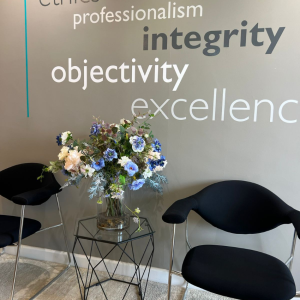
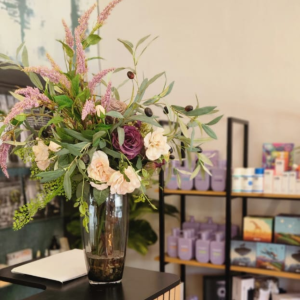
In many cases, a single well-placed botanical arrangement can create more impact than several smaller decorative pieces scattered across a room.
Think of it like punctuation in writing.
Too many commas make a sentence hard to read.
Too many decorative objects make a space hard to experience.
- Too Many Competing Elements
A common workplace styling mistake is mixing too many visual elements at once.
For example:
- multiple plant styles
- artificial plants and fresh flowers
- decorative accessories
- artwork and objects
- different colours and textures
When every item tries to be a focal point, space loses visual clarity.
Good design creates hierarchy — where one element leads and the others support.
In office environments, this often means choosing one strong visual feature rather than several smaller ones.
A single botanical focal point in a reception area or boardroom can anchor the room and create a sense of calm, professionalism, and intentional design.
Why This Happens in Cape Town Offices
Many workplaces in Cape Town rely on live office plants to soften professional interiors and create a welcoming atmosphere.
But local conditions can make plant maintenance challenging.
Common issues include:
- inconsistent natural light
- air-conditioning and temperature fluctuations
- limited time for ongoing plant care
- staff uncertainty about watering responsibilities
As a result, plants may struggle to survive — or businesses add more plants to compensate.
Over time, greenery accumulates without a clear design plan, and the workspace begins to feel crowded rather than calm.
This is why many companies are now rethinking how they approach office greenery in Cape Town — focusing less on quantity and more on intentional design.
- Over-Coordinated Corporate Decor
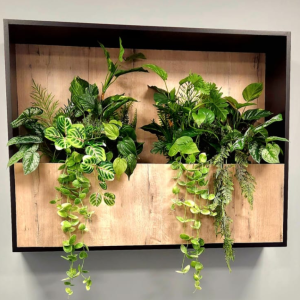
Perfectly matching furniture, accessories, and colours can sometimes make an office feel staged or impersonal.
While consistency is important, too much coordination can remove personality and warmth from a space.
Designers today often prefer:
- contrast
- layering
- natural textures
- organic shapes
These elements create environments that feel more human and less manufactured.
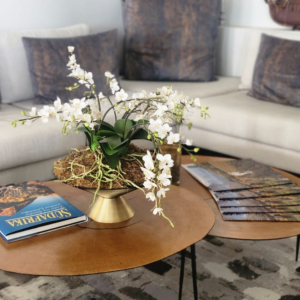
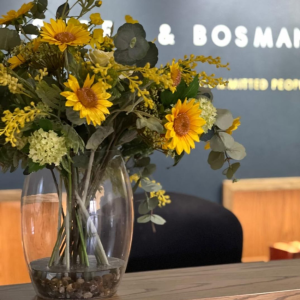
Natural forms — such as botanical arrangements — are particularly effective in structured office environments because they soften hard lines and introduce visual warmth without adding clutter.
- Generic Decorative Choices
Offices are often styled quickly during a move or renovation.
Décor is purchased to fill empty spaces, and the goal becomes:
“Make the room look finished.”
But generic decorative pieces can make interiors feel temporary or impersonal.
The most successful workplaces feel:
- considered
- intentional
- consistent
They rely on fewer elements that have greater visual impact.
Seasonal rotation is one simple way to keep a space feeling fresh without accumulating more décor.
Instead of adding new items each year, businesses can refresh existing spaces in a structured and controlled way.
- Clutter Masquerading as Decor
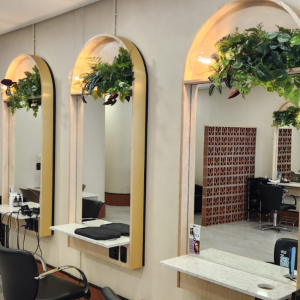
Sometimes what looks like decoration is clutter.
When storage is limited, everyday items end up on display:
- paperwork
- office supplies
- cables and equipment
- marketing materials
These objects compete visually with decorative elements and reduce the overall sense of calm in the workspace.
A clean environment allows design features to stand out.
And in professional settings, clarity often communicates competence.
A Simpler Approach to Office Greenery
Instead of adding multiple decorative elements, many businesses are moving toward a simpler strategy:
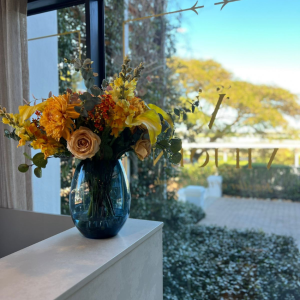
One intentional botanical focal point.
A thoughtfully designed arrangement or plant installation can:
- introduce natural softness
- create visual balance
- improve first impressions
- reduce maintenance demands
- support workplace wellbeing
Maintenance-free botanical arrangements are also becoming increasingly popular in professional environments where live plants struggle to survive.
Many offices are exploring sustainable alternatives to fresh flowers when live plants repeatedly fail.
(You can read more about this in our article: Artificial Flowers Are More Natural Than You Think.)
This shift reflects a broader trend in workplace design — one that prioritizes practicality, sustainability, and visual clarity.
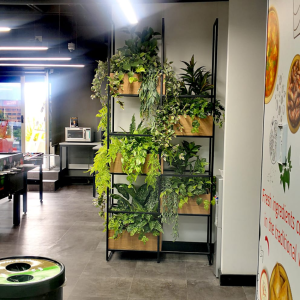
Designing Offices That Feel Balanced
The most successful workplaces rarely rely on large amounts of décor.
Instead, they focus on intentional design elements that support the atmosphere of the space without overwhelming it.
For many offices in Cape Town, this means introducing carefully considered botanical features that soften the environment while remaining practical to maintain.
A single well-placed botanical feature can:
- Anchor a reception desk
- Soften the boardroom
- Welcome visitors
- Create a sense of calm
- Reinforce a professional brand image